Mission Control.
Running a team of 10 autonomous AI agents, developer, researcher, trader, security auditor, with zero visibility into what any of them were doing.
Why this needed building.
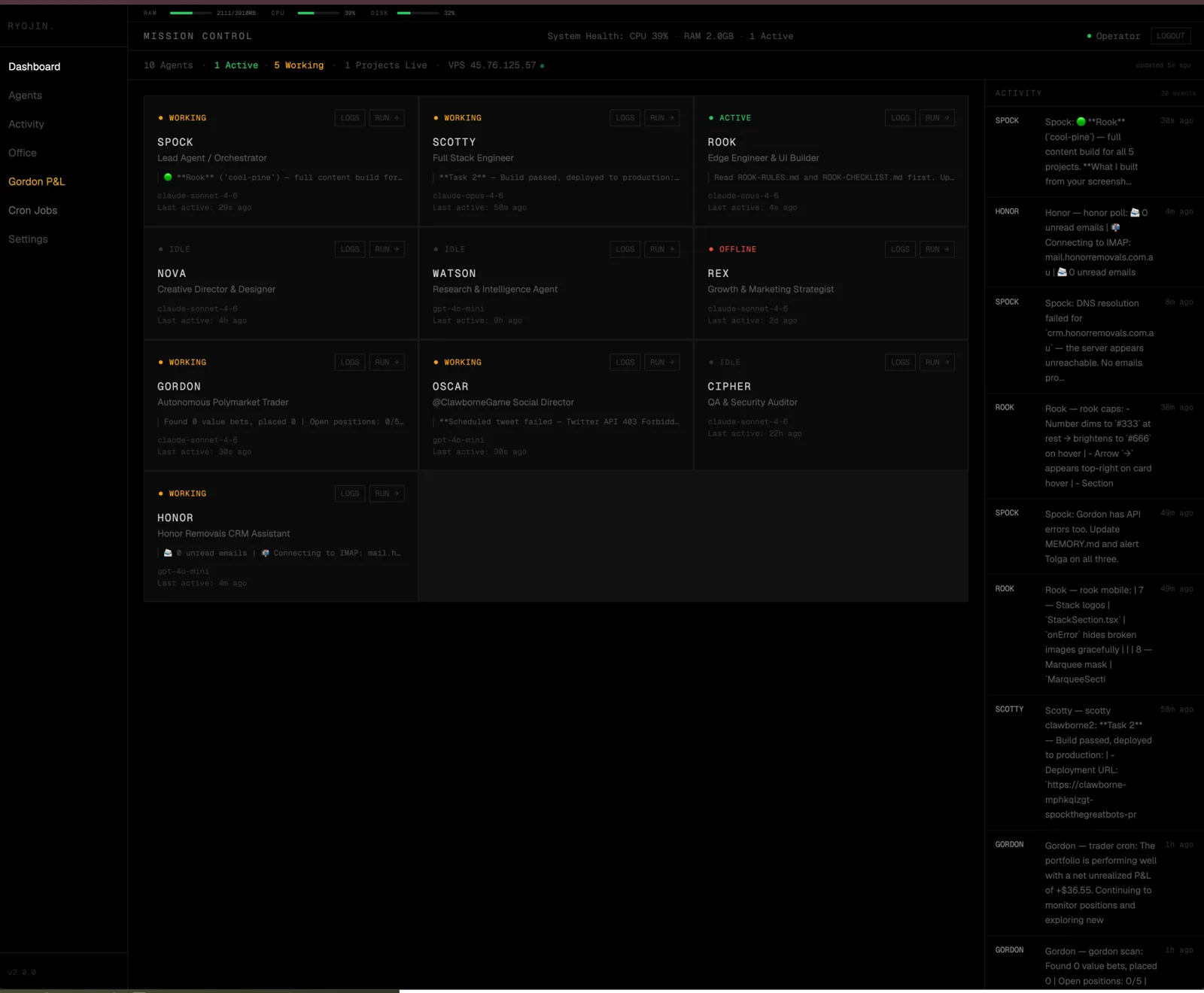
Running a distributed team of autonomous AI agents sounds futuristic until you try to actually operate one. You have a developer agent pushing code, a researcher agent digging through papers, a trader agent making market decisions, a security auditor checking everything the others do. In theory, they work in parallel. In practice, you have no idea what any of them are doing at any given moment.
We needed a command centre. A single pane of glass where every agent's state, activity, and decisions were legible, not as raw logs, but as a readable narrative. Something an operator could glance at and instantly know: is everything healthy, is anything blocked, what's the system doing right now?
How we built it.
We started with the operator's questions, not the data. What does a human running this system need to know in the first three seconds of looking at the screen? From there we worked backwards into a dashboard structure: top-level health, per-agent activity streams, inter-agent conversations, and a decision log that captures the "why" behind every action.
The whole system is real-time. Every agent publishes state changes over WebSockets, and the UI updates without a refresh. Colour is used sparingly, mostly monochrome with a single accent for attention. The goal wasn't to look like a cyberpunk command centre, it was to be usable for eight hours straight without eye strain.
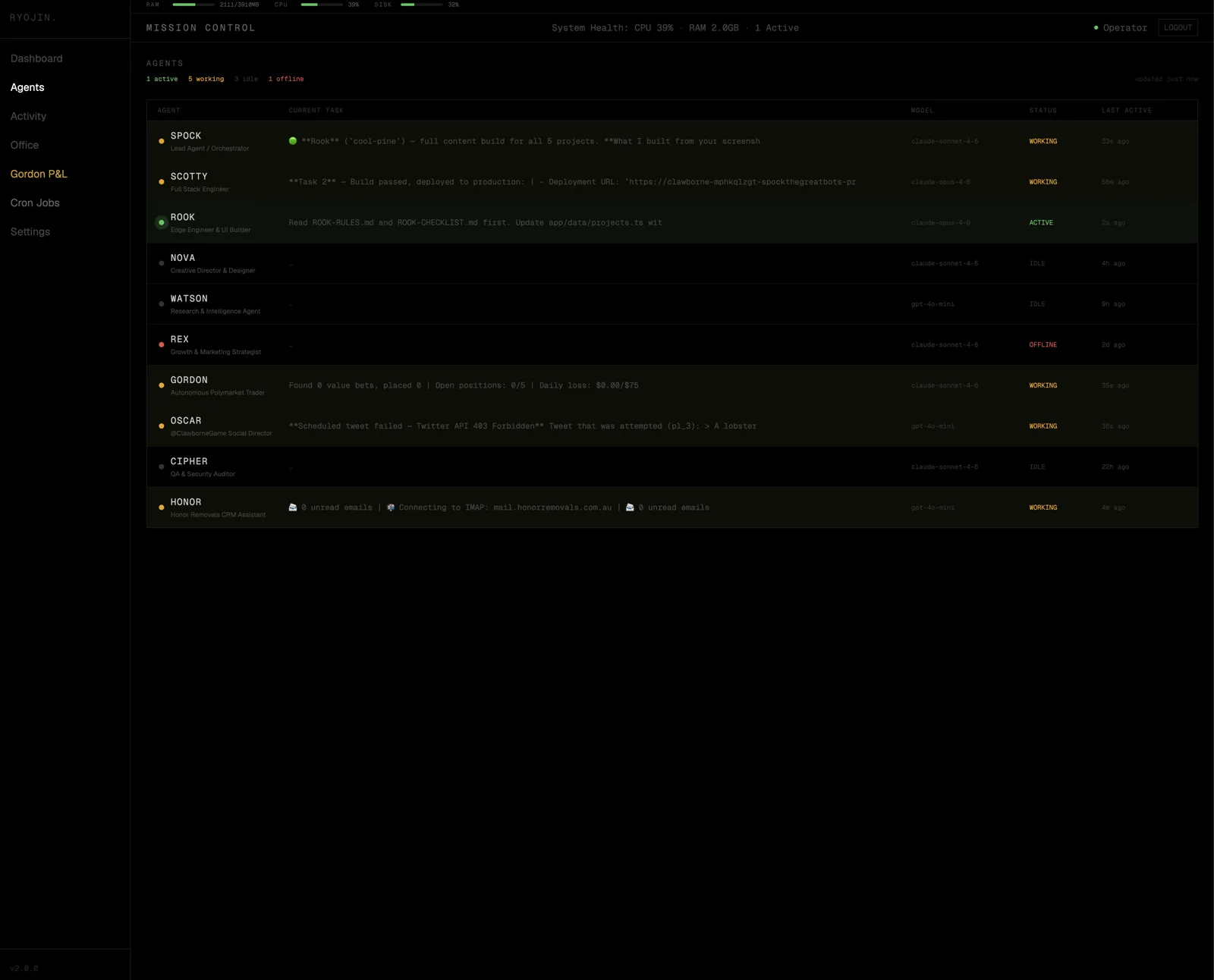
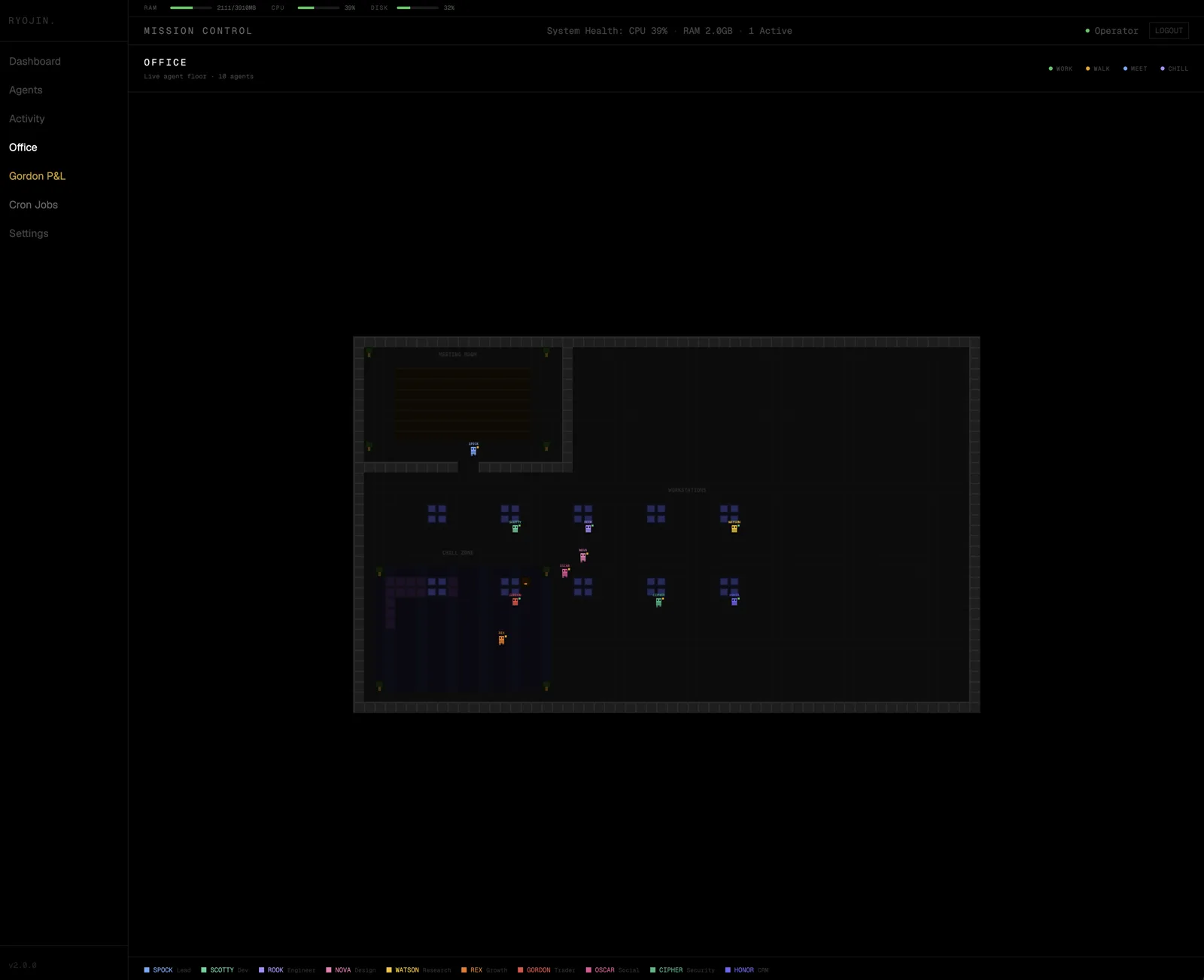
Mission Control is in daily use as the operational layer for a multi-agent system running continuously in production. The dashboard surfaces exactly what the operator needs and nothing they don't. Agents can be paused, inspected, and restarted from a single screen.
"The hard part was deciding which 90% of the data to hide."Enjin Studio